This article is written by Divya Gupta, Vivekananda Institute of Professional Studies (VIPS-TC), GGSIPU.
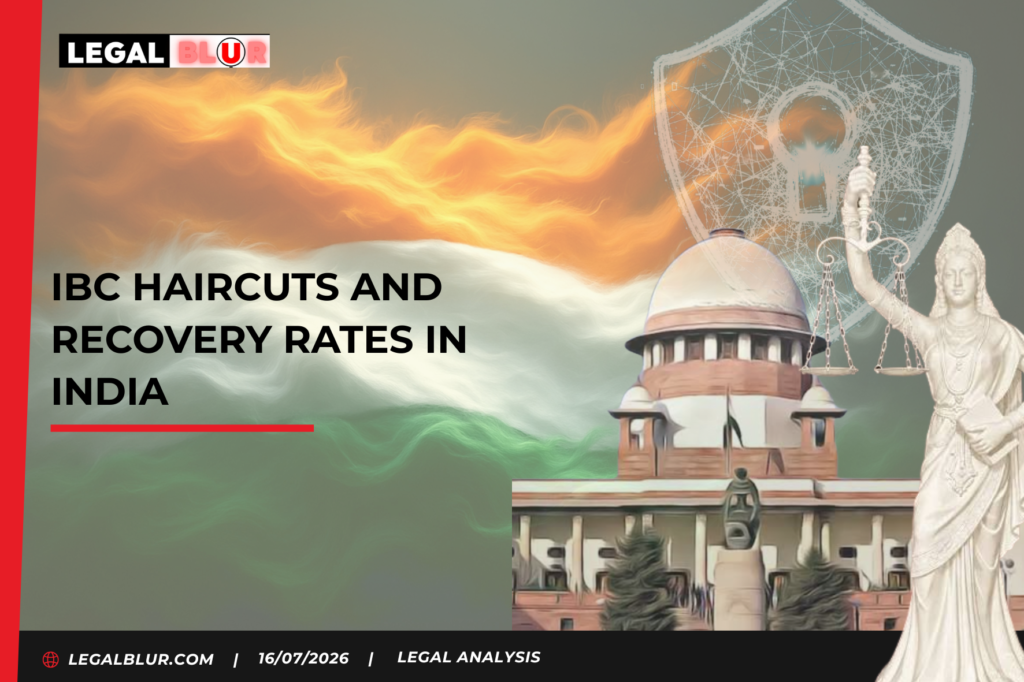
The Insolvency and Bankruptcy Code of 2016 was passed by the Parliament of India with an express mandate, that of bringing together the scattered and inadequate insolvency regime of India with a single and time-bound process of handling corporate insolvency. Before IBC, on average, it took 4.3 years to resolve any case of insolvency in India with a recovery rate of only 15-20%. Multiple pieces of legislation and different forums used to cause utter confusion for the creditors. It was through these objectives of time-bound 180 days of insolvency resolution, maximization of values of creditors, and revival of the distressed company that the Code sought to achieve all of this.
As the IBC enters its tenth year in May 2026, the data is a combination of both positives and negatives. On one hand, the Indian government states that over 1,419 resolution plans have been passed and more than ₹4 lakh crore has been recovered by the creditors ever since the code was introduced. On the other hand, according to the ICRA report released in May 2026, the average resolution period increased to 744 days, recovery rates dropped drastically to 23% in FY26 compared to 46% in FY25, and creditors are still suffering 67% haircuts for admitted claims.
What is a Haircut and Why Does it Matter?
A “haircut” refers to the difference between what the creditor is owed and how much money the creditor receives in the process of insolvency proceedings. For instance, if the bank is owed ₹100 crore but receives ₹33 crore from the resolution proceedings, then it means that the bank has had to take a haircut of 67 percent. Haircuts refer to irretrievable losses incurred by the creditors, banks, and financial institutions.
The Insolvency and Bankruptcy Code (IBC) has seen recoveries of ₹3.99 lakh crore out of total admitted claims of ₹12.31 lakh crore, resulting in an average recovery rate of around 32%, thereby reflecting a haircut of 68% for the creditor community as a whole. The situation had worsened drastically during FY26, wherein the third quarter of the financial year 2025-26 witnessed the worst-ever haircut of 80% recorded within a single quarter. According to ICRA, the large cases, which refer to those cases where the amount of admitted claims is more than ₹1,000 crore, constitute around 95% of recovery amounts despite accounting for only 8% of resolution plans.
One of the major reasons behind the occurrence of substantial haircuts is because many companies entering CIRP are already financially insolvent. In fact, about 42% of the firms that have been through resolution processes had dealings with the Board of Industrial & Financial Reconstruction or defunct before being admitted into the resolution process. Once a company has depleted all its resources, there is nothing a resolution process can do to return the value back. As pointed out by the Supreme Court in Committee of Creditors of Essar Steel India Ltd. vs. Satish Kumar Gupta (2019), the main purpose of IBC is value maximization, but that can only happen when the process starts before the company deteriorates fully.
The Problem of Delays
Section 12 of the Insolvency and Bankruptcy Code states that the Corporate Insolvency Resolution Process (CIRP) should be completed within 180 days, with an optional extension period of 90 days subject to the approval of 66% of the voting share of the Committee of Creditors. The total permissible period, inclusive of any legal battles, may not exceed 330 days. In the case of ArcelorMittal India Pvt. Ltd. vs. Satish Kumar Gupta (2018), it was ruled that such a period is mandatory, but legal battles can be excluded from it.
In reality, however, the situation appears vastly different. According to March 2026 figures, the average resolution period is 744 days, which is almost double the maximum statutory period of 330 days. Around 78 percent of all admitted Corporate Insolvency Resolution Process (CIRP) cases are past 270 days since admission. ICRA states that inadequate manpower in terms of NCLT judges is the primary institutional reason, with the agency highlighting a lack of sufficient judges to handle the number of admitted cases. The inadequacy leads to a pile-up, extending proceedings, delaying rulings, and eventually allowing asset degradation to take place until resolution takes place.
However, there is much more than that to such delays, and they affect not only the inefficiency of the process but also contribute to the erosion of value. As the Bankruptcy Law Reforms Committee noted in its report, the long duration of proceedings without any ownership and governance increases the chances of making liquidation the only solution possible. Vidarbha Industries Power Ltd. vs. Axis Bank Ltd. (SC 2022) is an important Supreme Court judgment on the topic of delay and states that the provision of Section 7(5)(a) in the IBC allows the NCLT to decide whether to accept or not to accept an application despite the fact of default owing to the financial viability of the corporate debtor. Though this provision helps avoid unnecessary proceedings against solvent companies, it can become a source of delay as well.
Recovery Rates – The Real Test of IBC’s Success
The recovery rate refers to the ratio of money that is paid back to the creditors as a percentage of the claimed amount. It is clear from the facts that the recovery rate has increased considerably post the enactment of IBC, considering that before its enactment, the recovery rate stood at around 15-20%.
This recent trend poses some serious concerns. In FY26, recovery rates have decreased to 23%, down from 46% in FY25, nearly halving in one year. The difference between the two results (resolution vs. liquidation) is quite stark. While 31% recovery is achieved through resolution, 4% is recovered through liquidation. This clearly illustrates that it needs to be avoided; however, out of 7,102 case closures, 3,003 cases (around 42%) were concluded through liquidation, not resolution.
The famous case of Byju Raveendran v. Think & Learn Pvt Ltd (NCLAT, 2024) illustrates another aspect of the functioning of the IBC.In the case, Byju’s was placed in CIRP based on the petition for ₹158.9 crore made by BCCI. However, before the formation of the Committee of Creditors, a complete settlement was made, and NCLAT used its inherent powers under Rule 11 to allow withdrawal of the petition. This reflects the deterrent effect of the IBC—the mere threat of insolvency proceedings is often enough to compel settlement outside formal CIRP. According to the data provided by the IBBI, more than 30,000 cases are settled before the admission stage, with the total amount of settlements being almost ₹14 lakh crore.
The constitutional validity of the Code, including its waterfall mechanism under Section 53, which governs distribution of proceeds in liquidation, was upheld by the Supreme Court in Swiss Ribbons Pvt. Ltd. v. Union of India (2019). The court held that the IBC is beneficial legislation aimed at the revival of corporate debtors and that the distinction between financial and operational creditors is constitutionally valid.
Institutional Challenges
Apart from judicial delays, the insolvency ecosystem continues to face several institutional challenges, including shortage of resolution professionals, delayed valuation reports, frequent litigation before appellate forums, and limited infrastructure within the National Company Law Tribunal. These systemic deficiencies directly affect the speed and effectiveness of the resolution process.
Conclusion
A decade after its enactment, the insolvency regime in India has significantly changed due to it. There are some empirical signs of better recovery, a decrease in the non-performing assets ratio in the banking sector from 11.8% in 2017 to 2.1% as of September 2025, as well as the deterrent role of the Code as shown by more than 30,000 out-of-court resolved cases. These are genuine achievements.
However, there are still challenges that exist, including the high haircuts, delays in the process, and low recoveries observed during fiscal year 2026. It means that the potential of the Code has not been achieved completely. The problem is mostly structural, as a continuous lack of manpower in NCLT needs to be addressed. Low judicial capacity implies further delays of cases over the 330-day mark, continuous loss of assets’ value, and high haircuts. The seventh amendment of the Code, passed in April 2026, seems to be a positive measure. However, as ICRA notes, implementation of the amendment is critical.
The aspiration of the IBC to achieve time-bound maximization of value has only been partially reached. The next decade should focus on legislative and institutional capacity building in line with the aspirations of the Code.
Frequently Asked Questions
1. What is meant by a haircut in case of the IBC?
The haircut refers to the gap between the total amount that the creditors have a legal claim on and what they actually manage to collect from the resolution process. Hence, a 67% haircut means that creditors recover just 33% of the total amount they have claims on.
2. What causes resolution processes to go beyond the 330-day deadline?
The primary reason is the lack of manpower at the National Company Law Tribunal (NCLT), resulting in delayed hearings and order-making. Other reasons include litigation by the promoters as well as the complexity involved in some of the cases.
3. How does resolution recovery differ from liquidation recovery?
A typical successful resolution plan would result in recovery of 31% by the creditors. However, in the case of liquidation, the recovery rate is much lower—about 4%. This is because in liquidation the assets are sold off in bits.
4. What is the IBC deterrence mechanism?
The threat of insolvency proceedings forces the debtors to clear off their dues before even a CIRP is admitted. More than 30,000 cases with a value of ₹14 lakh crore have already been resolved through these settlements.
References
- Insolvency and Bankruptcy Code, 2016 — Sections 12, 30, 31, 53
- Committee of Creditors of Essar Steel India Ltd v. Satish Kumar Gupta, (2019) — https://indiankanoon.org/doc/7427609/
- ArcelorMittal India Pvt Ltd v. Satish Kumar Gupta, Civil Appeal Nos. 9402-9405 of 2018 — https://ibbi.gov.in/webadmin/pdf/whatsnew/2018/Oct/33945_2018_Judgement_04-Oct-2018_2018-10-04%2018:02:45.pdf
- Vidarbha Industries Power Ltd v. Axis Bank Ltd, (2022) — https://ibbi.gov.in/uploads/order/a03e3063d5dbbca2bceb00f8402ec3ba.pdf
- Swiss Ribbons Pvt Ltd v. Union of India, (2019) 4 SCC 17
- Byju Raveendran v. Think & Learn Pvt Ltd, NCLAT, 2 August 2024 — https://indiankanoon.org/doc/50482061/
- ICRA, “Sharp decline in IBC recoveries in 2025-26; resolution time remains stretched,” Press Release, 27 May 2026 — https://www.icra.in/CommonService/OpenMediaS3?Key=fe0064b0-f014-4e96-9d36-353ac5484a74
- Ministry of Corporate Affairs, “Insolvency and Bankruptcy Code (IBC) completes 10 years,” Press Information Bureau, 28 May 2026 — https://www.pib.gov.in/PressReleasePage.aspx?PRID=2266350