This article is written by Shalom Manamela, Noida International University. This article examines whether India’s existing information technology framework strikes an appropriate constitutional balance between regulating harmful online content and protecting the fundamental right to freedom of speech and expression.
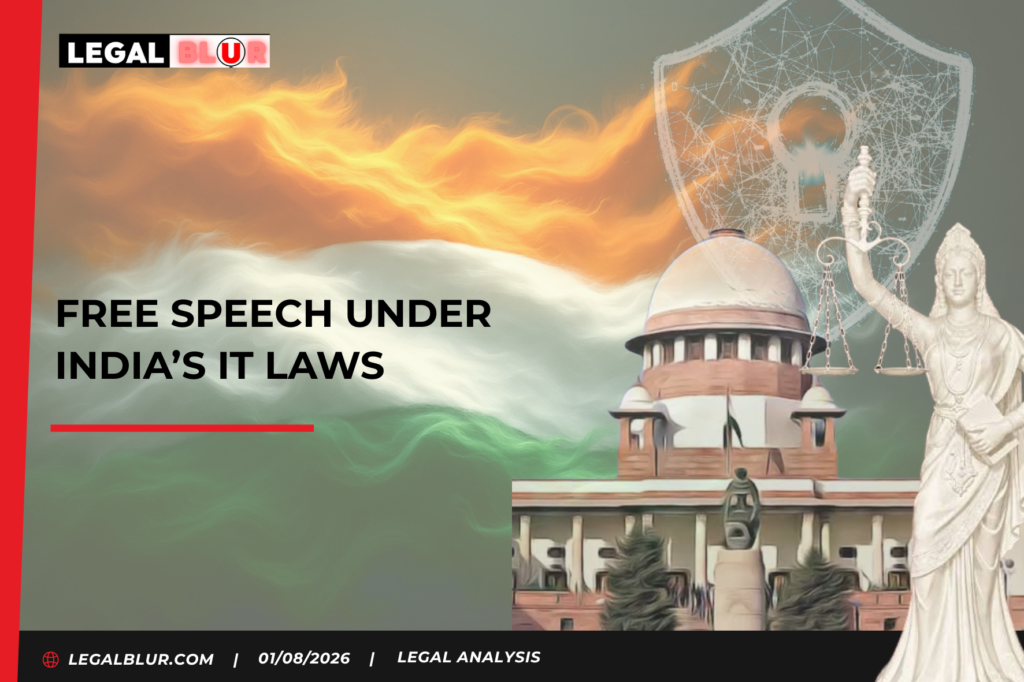
India has undergone a digital revolution which has changed the way the citizens communicate, relate to, and engage with the public. Instagram, X (Twitter), Facebook and YouTube have emerged as the mediums of political debate, journalism, civic engagement, social activism and public discourse. These platforms have empowered citizens to voice their views and share information at an unprecedented rate, thereby enhancing democratic participation. Meanwhile, they have also fostered the rapid dissemination of misinformation, hate speech, online harassment, deepfakes and other forms of harmful digital content that can impact public order, the rights of individuals and national security.
The challenge to strike a balance between the regulation of digital platforms and the defense of freedom of speech and expression is a challenge faced by the governments of all countries around the world. This issue has been heightened through the enactment of the Information Technology Act, 2000, the Information Technology (Intermediary Guidelines and Digital Media Ethics Code) Rules, 2021, and the proposed amendments in the regulatory framework for intermediaries and online content in India. The recent proposals by the Ministry of Electronics and Information Technology (MeitY) have sparked a lot of debate on the Constitution, especially in the realms of intermediary liability, content moderation, and government regulations on digital platforms. Those who want to better regulate in order to stop cybercrime, misinformation and illegal online content, however, say that too much executive control over online speech could have a chilling effect on lawful speech and democratic dissent.
Article 19(1)(a) of the Indian Constitution provides the fundamental right to freedom of speech and expression to all the citizens of India. This right is not unlimited, however. Article 19(2) allows reasonable restriction in the interest of sovereignty and integrity of India, security of the State, friendly relations with foreign States, public order, decency or morality, contempt of court, defamation and incitement to an offence. However, as digital communication has grown, the use of these constitutional principles has become increasingly complicated and courts and legislatures have had to decide what traditional free speech protections would look like in a rapidly changing technological landscape.
The article examines the legal regime applicable to intermediaries, recent regulatory changes, and key judicial rulings, while reflecting on the effectiveness of the current regime at protecting the values of democracy in the digital age. It maintains that good digital governance should ensure the safety of society while at the same time not restricting or abusing legitimate expression in an unnecessary manner or limiting constitutional freedoms.
The Constitutional Foundation of Speech in India
The Freedom of Speech and Expression is one of the most important fundamental rights provided in the constitution of India under Article 19(2) which enumerates reasonable restrictions on freedom of speech and expression in the interests of the sovereignty and integrity of India, friendly relations with foreign States, public order, decency or morality, contempt of court, defamation and incitement to an offence.
This has been laid down as the basis of democracy by the highest court and it highlights the importance of citizens being informed and expressive, which is essential to the transparency, accountability and good working of democratic institutions. This right is not merely limited to print media, but is also extended to online platforms to include the right to communicate, organise social movements and participate in public debate among millions of Indians. Despite the guarantee of freedom of speech in the Indian constitution, the government can put restrictions on it under certain conditions such as provisions related to sovereign and integrity of India, security of the state, relations between the state and other states, public order, decency, morality, contempt of court, defamation, incitement to an offence and the sovereignty and integrity of the nation in accordance with article 19(2) of the constitution.
The restriction highlights that while democracy is an expression it should be balanced with the interest of society and the constitution. The difficulty is getting the restrictions right: that they are not arbitrary, neither unfair nor unconstitutional, and that they are not an instrument for the stifling of legitimate criticism or opposition.
In the case of Shreya Singhal v Union of India, the Court was able to declare section 66A of the IT Act 2000 as vague as it also held that this section had an impact on expression. The court also clarified that all limitations on speech must be compatible with the constitutional requirements of article 19(2) and must not be justified on the basis of some opinions being ‘offensive’ or ‘unpopular’.
The Supreme Court also drew a fine line between the concept of discussion, advocacy and incitement of a particular idea, which it held continued to be protected under Article 19(1)(a), even if such ideas were unpopular or controversial. The State can restrict speech only if it is incitement and only if it is on one of the grounds mentioned in Article 19(2). This difference has been recognized as one of the most important constitutional principles pertaining to internet speech in India.
In Justice K. S. Puttaswamy (Retd.) v. Union of India, the court determined that the right to privacy was a fundamental right guaranteed by Article 21 of the constitution and the judgement also acknowledged that the right to privacy and the freedom of expression are interlinked constitutional values. People can enjoy their right to free expression better if they are not subject to arbitrary surveillance, unlawful collection of personal information and disproportionate State interference. Thus, digital privacy has become a significant constitutional protection of meaningful freedom of expression in the online world.
The Evolution of India’s Information Technology Framework
The Information Technology Act, 2000 was the first comprehensive legislation in India that covers electronic commerce, electronic record, digital signatures, and cyber offences. The Act was originally designed to enable electronic transactions and to accord legal value to electronic records, but was eventually developed as the main law on cyberspace, intermediary’s liability and online offenses.
A significant development occurred with the introduction of the Information Technology (Intermediary Guidelines and Digital Media Ethics Code) Rules, 2021, which imposed greater due diligence obligations upon intermediaries. These Rules require significant social media intermediaries to appoint grievance officers, compliance officers, and nodal contact persons, establish grievance redressal mechanisms, preserve specified information, and remove unlawful content upon receiving valid legal directions. While these measures seek to enhance accountability and combat misinformation, hate speech, and cybercrime, they have also generated constitutional concerns regarding excessive governmental control over online speech and intermediary liability.
Intermediary Liability and the role of Social Media Platforms
Intermediaries such as Instagram and Facebook. YouTube has a central role in facilitating online communication as they host content created by users. Under the Information Technology Act 2000 these platforms have safe harbour protections which shield them from liability for third parties’ content if they comply with their obligations and exercise due diligence. The Information Technology Rules 2021 gives intermediaries great responsibility for appointing grievance officers, timely removal of unlawful content when legally ordered and creation of mechanisms that address complaints from users.
These measures will be there to combat misinformation, hate speech, online abuse and other harmful content at the same time promoting accountability in the digital space. Some critics argue that these obligations put on platforms might make them remove lawful speech in fear of legal consequences which affect freedom of free expression. The challenge is to ensure that intermediaries can contribute to a safer online environment without being instruments of excessive censorship or undermining the constitutional guarantee of freedom of speech.
The legal basis for intermediary immunity is contained in Section 79 of the Information Technology Act, 2000, which grants intermediaries conditional safe harbour protection for third-party content, provided they observe due diligence and comply with the statutory requirements prescribed under the Act and the Information Technology Rules.
In Shreya Singhal v. Union of India, the Supreme Court clarified that intermediaries cannot be compelled to remove online content merely upon receiving private complaints. The Court held that intermediaries are required to disable access to content only upon receiving a valid court order or a lawful notification issued by the appropriate Government under the relevant provisions of law. This interpretation significantly strengthened protection against arbitrary censorship while preserving intermediary accountability.
Recent Controversies and the Regulation of Online Speech
The regulation of online speech has become increasingly controversial following recent proposals and amendments relating to intermediary obligations and online content regulation under the Information Technology Rules. Particular debate arose over governmental efforts to regulate online misinformation through official fact-checking mechanisms and expanded executive oversight of digital platforms. While supporters argue that stronger regulation is necessary to combat fake news, cybercrime, and harmful online content, critics contend that excessive governmental control over online expression may discourage investigative journalism, political criticism, and democratic dissent by creating a chilling effect upon lawful speech.
The constitutional validity of certain amendments to the Information Technology Rules has also been challenged before the courts on the ground that excessive executive control over determining the truthfulness of online content may disproportionately restrict freedom of speech guaranteed under Article 19(1)(a). These challenges demonstrate the continuing constitutional tension between legitimate regulation of harmful content and protection against governmental censorship.
Finding the balance between regulation and freedom
A constitutionally balanced regulatory framework must protect both public interest and individual liberty. While the State possesses a legitimate interest in combating cybercrime, misinformation, hate speech, online harassment, and threats to national security, regulatory measures must satisfy the constitutional requirements of legality, necessity, proportionality, and procedural fairness. Excessively broad or vague restrictions may discourage legitimate criticism and democratic participation. Greater transparency in content moderation, independent judicial oversight, strengthened digital literacy, and improved platform accountability can help create a safer digital environment without undermining the constitutional guarantee of free expression. Ultimately, effective digital governance should strengthen rather than diminish democratic values.
Conclusion
Freedom of speech and expression remains one of the defining features of India’s constitutional democracy, particularly in the digital age. While the Information Technology Act, 2000 and the Information Technology (Intermediary Guidelines and Digital Media Ethics Code) Rules, 2021 seek to address the complex challenges posed by digital communication, their implementation must remain consistent with constitutional guarantees under Article 19(1)(a). Judicial decisions have consistently emphasised that restrictions upon online speech must be lawful, necessary, proportionate, and supported by one of the grounds specified under Article 19(2). As technology continues to evolve, India’s digital regulatory framework must maintain an appropriate balance between combating harmful online content and preserving democratic freedoms. A transparent, rights-based, and constitutionally accountable regulatory framework will strengthen public confidence in digital governance while ensuring that the internet continues to serve as a platform for innovation, democratic participation, and the free exchange of ideas.
Frequently Asked Questions
1. How does the Indian Constitution protect freedom of speech?
Article 19(1)(a) guarantees the fundamental right to freedom of speech and expression, subject to the reasonable restrictions under Article 19(2).
2. What role does the Information Technology framework play in regulating online speech?
India’s IT framework governs intermediary obligations, online content regulation, cybersecurity, and digital platforms while balancing constitutional rights and public interest.
3. Can the government restrict online speech?
Yes. Restrictions are permissible only on the grounds specified in Article 19(2), such as public order, national security, decency, defamation, and the sovereignty and integrity of India.
4. Why is the balance between regulation and censorship controversial?
Excessive regulation may affect free expression, while inadequate regulation can enable misinformation, hate speech, cybercrime, and other harmful online activities.
5. Which landmark judgment shaped online free speech in India?
The Shreya Singhal v. Union of India (2015) judgment struck down Section 66A of the Information Technology Act, reinforcing constitutional protection for online free speech.