This article is written by Yuvika Semalti, USLLS, GGSIPU. This article covers the critical analysis of Mob Lynching as an offence under BNS, 2023.
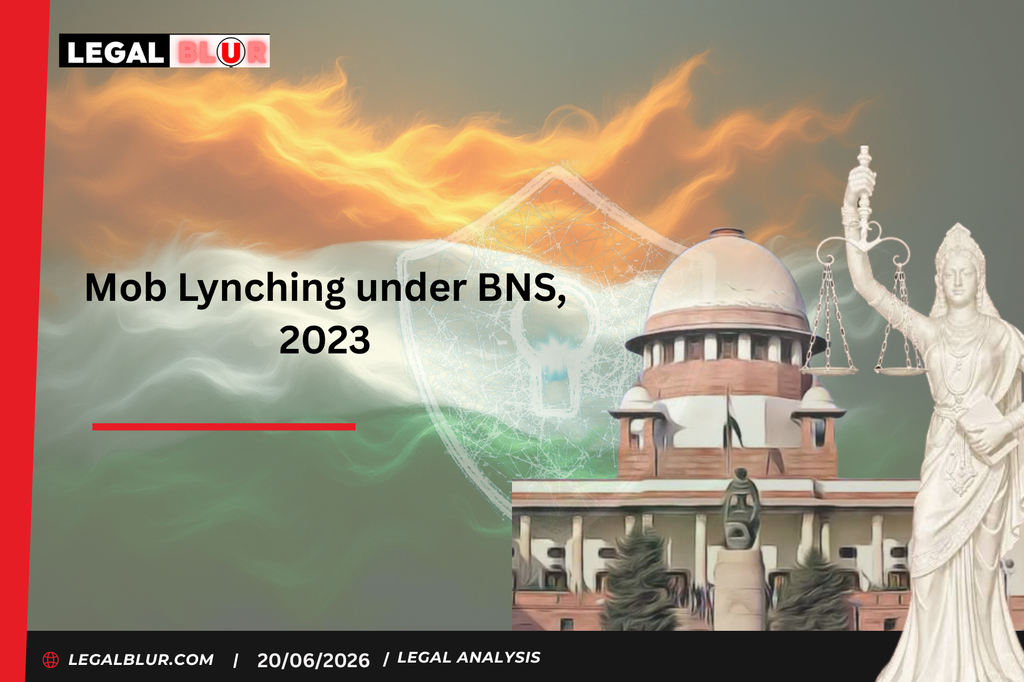
The word mob in its core means a group of persons, and lynching is an act of execution of a person by a mob without any fair and legal trial. The word lynching derives its roots from “Lynch law”, which came in vague during The American Revolution in the 18th century. Mob lynching is mentioned under section 103(2) of BNS, 2023, which defines it as five or more people committing murder of a person on the grounds of race, caste or community, sex, place of birth, language, personal belief or any other similar ground. Section 117(4) defines mob violence as a grievous hurt caused by a mob based on race, caste or community, sex, place of birth, language, personal belief or any other similar ground. Under IPC, there was no specific provision available for the offence of mob lynching; thus, its inclusion under BNS marks a significant step towards the development of the Indian legal system. It also showcases adherence to Indian laws towards current legal issues existing in the country.
Keywords: mob, lynching, BNS, IPC, adherence
Essentials of Mob Lynching
As per section 103(2) of BNS, 2023, the following are the essentials of mob lynching:
- Group of five or more people
- Commits a murder
- The murder must be committed on grounds of race, caste, community, sex, place of birth, language, personal belief, or any other similar ground.
- Section 104 of BNS punishes each member of the mob with a death sentence or life imprisonment for causing a mob lynching.
- Section 117 (4) of BNS provides for a punishment of imprisonment of a description that may extend to seven years, and a fine, for perpetrators of mob violence.
Causes of Mob Lynching
Mob lynching is the most prominent example of prejudice prevailing over law and human rights. It shows how humanity gets degraded due to social, economic and religious differences existing in the society. Following are major causes of mob lynching in India:-
- Religious Polarization – India is a diverse country consisting of people from different religions, castes, and ethnicities. This immense diversity often leads to clashes among citizens, which can turn into violent altercations and mob lynching as well.
- Social Discrimination – Social discrimination has been rooted in Indian society since its birth, despite post-colonial laws regarding untouchability, equality, minority rights, and social discrimination on the basis of caste, race, and creed continue to exist in the society. Such discrimination also causes mob lynching.
- Rumours and false information – Messaging applications and social media platforms like WhatsApp, Twitter and Instagram became the nexus for spreading rumors and misinformation, which contains atrocities done by one fraction of people with other fraction, such false information is one of the major causes of mob lynching.
- Cow Vigilantism – Cow Vigilantism is one of the root causes of mob lynching. False rumors about beef consumption, cow slaughter by a specific community [mostly minorities and lower castes] are spread, leading to cases of mob lynching.
- Absence of specific laws – Adhering to increasing incidents of mob lynching the government took a significant step by including it in BNS,2023, but before that, there was no specific provision available in IPC for the offence; thus, mob lynching spread its roots deep in the Indian Society due to the long delay in the introduction of specific laws.
- Political Exploitation – Despite being an advanced country, Indian politics and politicians’ rallies still continue to revolve around socio-religious diversity. Political parties still use the menacing divide and rule formula to win a majority in elections. Due to such political strategies, mob lynching prevails in Indian society.
Inclusion of Mob Lynching in Indian Legal System
- Absence of specific provision under IPC – Indian Penal Code does not recognize mob lynching as an offence, there were sections which dealt with murder, culpable homicide, attempt to murder, voluntary harm, grievous bodily harm etc. But no provision was available to deal with mob lynching separately.
- Krishnamurthy Case 2015 – The Supreme Court strongly condemned caste-based violence and vigilantism, observing that no individual or group can assume the role of law enforcement. The Court emphasised that the rule of law must prevail over collective prejudice and unlawful social control exercised by groups or communities.
- Tehseen S Poonawalla and others V. Union of India – In 2018, the Supreme Court passed a landmark judgment recognising mob lynching as a threat to society. The Court affirmed that “Law is the mightiest in a sovereign country” and it should not be taken into its hands by people acting in rage and prejudice, erupting from false information and rumours. The Court, while passing the judgment, suggested that the legislative authority should make laws to address lynching as a specific offence. The Supreme Court also passed several preventive, remedial and punitive directions to deal with issues of mob lynching.
- State Legislations – Supreme Court’s landmark judgment of 2018 encouraged several states to form anti-lynching laws to curb mob lynching. Some of them are – The Manipur Protection From Mob Violence Ordinance, 2018, The West Bengal (Prevention Of Lynching) Bill, 2019, The Rajasthan Protection From Lynching Bill, 2019, Jharkhand Prevention Of Mob Violence And Mob Lynching Bill, 2021.
- Recognition under BNS, 2023 – In 2023, a significant development was marked in the history of the Indian Legal System. India showed a back to colonial laws and brought out its own substantial and procedural laws under different names. For the first time in 2023, mob lynching was recognized as a separate offence under BNS, 2023, showcasing the developing nature of Indian Laws as per existing atrocities in the society.
Challenges to BNS Framework
- Lack of effective enforcement – Laws are often perfect on paper, but poor executive policies make them ineffective, making them subject to criticism. While a good law has been enacted on paper, the government should focus on procedures that can effectively enforce that law as well.
- Absence of Statutory Definition – Although Section 103(2) specifically addresses mob murder committed by five or more persons on certain grounds, the term “mob lynching” itself has not been separately defined in the BNS. This may lead to interpretative debates regarding the precise scope of the offence.
- Five Person Requirement – Section 103(2) and 117(4) both requires five or more people acting together; similar conduct done by a smaller group won’t fall under the offence of mob lynching.
- Evidential Gaps – Mob Lynching often happens where a large crowd is gathered, making it difficult for the victim to produce substantive evidence.
- Political Exploitation – While laws are made to curb mob lynching, political parties still continue to use socio-religious differences as their prime agenda to gain votes, leading to communal tensions in society.
Conclusion
Mob lynching still continues to exist and poses a threat to democracy and the rule of law in India. The evolution of mob lynching resembles the strong adapting power of the Indian legal system as per current issues of the society, from the absence of a statutory provision to judicial measures and state laws, mob lynching finally got recognized under BNS, 2023. Although the majority of provisions under BNS are similar to IPC, it also included provisions for issues which were not existing when IPC was made. The effectiveness of BNS will depend on the efficient enforcement and consistent efforts of the authorities to prevent lynching.
Frequently Asked Questions
- What is the punishment for mob lynching under BNS?
Section 103[2] provides a death sentence or life imprisonment as the punishment for mob lynching and section 117[4] punisher the offender of mob violence with imprisonment of description and a fine.
- Where is mob lynching defined under BNS?
Section 103(2) provides for death or imprisonment for life along with fine where a murder is committed by a group of five or more persons on the specified grounds. Section 117(4) separately punishes grievous hurt caused by a group on similar grounds with imprisonment that may extend to seven years and fine.
- What is the difference between IPC and BNS?
IPC do not recognize mob lynching as a specific offence, though it does contain provisions about murder, culpable homicide, attempt to murder, etc. But BNS has a specific provision for lynching and mob violence, along with other offences.
- Do states have their own laws to deal with lynching?
Yes, many states have their own laws to deal with lynching in their particular state. For example – The Manipur Protection from Mob Violence Ordinance, 2018, The West Bengal (Prevention Of Lynching) Bill, 2019 etc.
- How is mob lynching different from murder?
Mob lynching is an offence committed by a group of five or more people on some specific grounds, while murder is committed by a single person or a group of persons.
References
https://www.mha.gov.in/sites/default/files/250883_english_01042024.pdf
https://www.casemine.com/search/in/Mob%2Blynching
https://indiankanoon.org/doc/71965246
https://www.ijlmh.com/wp-content/uploads/Mob-Lynching-in-India.pdf?pdf=1
https://www.drishtiias.com/daily-updates/daily-news-analysis/mob-lynching-9