
This article is written by Sanskriti Mishra, a third-year B.A. LL.B. student at NIMS University, Jaipur. This article examines how the increased reliance on forensic science and digital evidence can transform criminal investigations, cybercrime prosecution, and the overall administration of justice in the digital age.
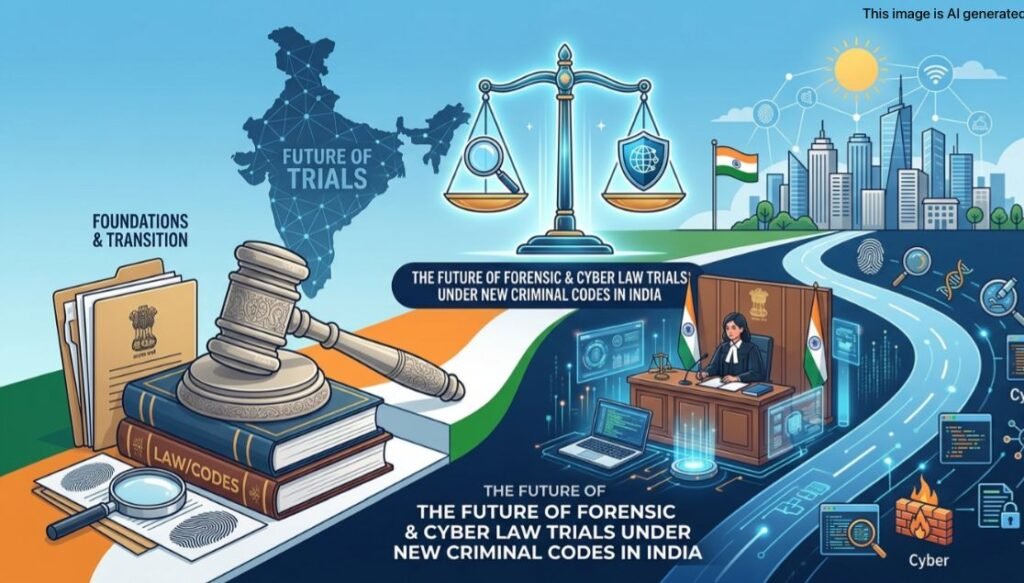
In the digital age, practically every facet of human existence has been changed including how crimes are committed and how they are investigated. Technological advancements are being presented due to the growing use of smart phones, social media, cloud storage, artificial intelligence and online financial services. It has, however, also been the catalyst for more advanced types of cybercrime, including online fraud, identity theft, ransomware attacks, cyberstalking, phishing, and data breaches.
Over the last 10 years India has seen a sharp increase in cybercrime offenses. Cyber crimes have risen significantly with the growth of the internet and digital transactions, reports revealed by the National Crime Records Bureau (NCRB). This evolution of crime has been a major reflection on the shortcomings of the conventional investigative approach which was mainly based on the physical evidence and eyewitness approach.
The Government of India has introduced three new Criminal Laws in 2023, namely Bharatiya Nyaya Sanhita 2023 (BNS), Bharatiya Nagarik Suraksha Sanhita 2023 (BNSS) and Bharatiya Sakshya Adhiniyam 2023 (BSA) to build a modern and technology-driven Criminal Justice System. These laws superseded the Indian Penal Code, 1860, the Code of Criminal Procedure, 1973 and the Indian Evidence Act, 1872.
The improvements in recognition of forensic science and digital evidence is one of the most important aspects of these reforms. The new framework aims to encourage scientific research, enhance the evidentiary requirements and bolster prosecution of cyber crime. With the continuous advancements in technology, the future of criminal trials in India will rely on increasing use of digital evidence and forensic science.
Growing Significance of Forensic Science in Criminal Trials
Forensic science is the use of science and technology in the investigation and resolution of crimes. It encompasses many fields including DNA analysis, fingerprint examination, toxicology, ballistics, cyber forensics, handwriting analysis and digital evidence examination.
Witnesses and confessions were the cornerstones of criminal cases in India in traditional times. These are still valuable pieces of evidence but may be obscured by inconsistencies, lapses in recall, intimidation or hostility. Scientific evidence, however, provides more objective and reliable data.
The BNSS adds a new focus on forensic investigation, notably in serious criminal offences. This is a progression from traditional confession-based investigations to evidence-based investigations. Scientific techniques can help investigators provide clear and reliable reconstruction of events, identification of the perpetrator and confirmation of witness statements.
DNA profiling, digital forensic analysis, biometric identification, and forensic laboratory reports are likely to be used more in the future for criminal trials. These can enhance judgment of the courts and mitigate the risk of wrongful convictions.
A significant reform under the BNSS is the requirement of forensic examination in offences punishable with imprisonment of seven years or more. This provision seeks to reduce dependence on confessions and eyewitness testimony by encouraging scientific investigation at the earliest stage of criminal proceedings.
Digital Evidence in Bharatiya Sakshya Adhiniyam, 2023
Digital evidence has changed the face of evidence in criminal proceedings. In today’s world, criminal activities leave behind electronic clues instead of physical ones.
Electronic records as documentary evidence is recognised under Bharatiya Sakshya Adhiniyam, 2023. This can encompass emails, text messages, call records, CCTV footage, social media communications, computer-generated documents, online transaction records as well as data stored in the cloud. What’s important about this reform is that a computer crime cannot be easily established without a computer crime proof. Electronic records can be the keystones of evidence in a variety of cases, such as online banking fraud or cyberstalking.
Proper preservation and authentication is required, however, before digital evidence can be admissible. Electronic records must be kept in a manner that ensures their integrity during the investigation. A chain of custody becomes very important in this. Investigating agencies need to ensure that digital evidence is collected, stored, and presented in a way to prevent tampering or altering. The sophistication of cybercrime puts forensic analysts able to investigate electronic devices and digital networks at the heart of future criminal trials.
Impact on Cyber Law Trials
Cybercrime presents unique legal and practical challenges. Unlike conventional crimes, cyber offences can be committed anonymously and across multiple jurisdictions. Offenders may operate from foreign countries while targeting victims located in India.
The new criminal laws aim to strengthen the capacity of investigating agencies to deal with such offences. The increasing recognition of digital evidence and scientific investigation is expected to improve the effectiveness of cyber law enforcement.
Future cyber law trials are likely to involve offences such as:
- Online financial fraud
- Identity theft
- Phishing attacks
- Cyberstalking
- Data theft and privacy violations
- Ransomware attacks
- Cryptocurrency-related frauds
- Cyber terrorism
The investigation of such crimes requires specialized expertise in digital forensics. Investigators may be required to recover deleted files, trace IP addresses, analyze blockchain transactions, examine mobile devices, and retrieve cloud-based evidence.
Consequently, forensic laboratories and cyber forensic experts will become increasingly important stakeholders in the criminal justice process. Courts will also need to adapt to technological developments by enhancing judicial understanding of complex digital evidence.
Challenges in Implementing the New Framework
Despite the progressive nature of the new criminal laws, several challenges remain.
Firstly, India continues to face a shortage of forensic laboratories and trained forensic professionals. Delays in obtaining forensic reports frequently affect the speed of criminal investigations and trials.
Secondly, many law enforcement agencies require specialized training to effectively handle digital evidence. The collection and preservation of electronic records demand technical expertise that may not always be available at the ground level.
Thirdly, concerns relating to privacy and surveillance continue to raise constitutional questions. While technological tools can strengthen investigations, their use must remain consistent with the right to privacy and other fundamental rights.
Fourthly, cybercrime often transcends national boundaries. Obtaining electronic evidence from foreign jurisdictions involves complex legal procedures and international cooperation, which may delay investigations. Unless these structural challenges are addressed, the full benefits of the new criminal laws may not be realized.
Important Case Laws
1. Anvar P.V. v. P.K. Basheer (2014) 10 SCC 473
In this landmark case, the Supreme Court clarified the legal requirements governing the admissibility of electronic evidence. The Court emphasized that electronic records must satisfy statutory conditions before being admitted in judicial proceedings. The judgment significantly strengthened the evidentiary framework relating to digital records.
2. Shafhi Mohammad v. State of Himachal Pradesh(2018) 2 SCC 801
The Supreme Court addressed practical difficulties faced by parties seeking to produce electronic evidence when they did not possess control over the relevant device. The decision highlighted procedural challenges associated with digital evidence.
3. Arjun Panditrao Khotkar v. Kailash Kushanrao Gorantyal (2020) 7 SCC 1
This judgment reaffirmed the importance of complying with statutory safeguards relating to electronic evidence. The Court recognized that procedural requirements are essential to preserve the authenticity and reliability of digital records.
These judgments continue to influence the interpretation and admissibility of electronic evidence and remain relevant in understanding the future direction of cyber law trials in India.
4. Tomaso Bruno v. State of Uttar Pradesh, (2015) 7 SCC 178
The Supreme Court emphasised the importance of scientific and electronic evidence in criminal investigations and observed that adverse inferences may be drawn when relevant electronic evidence, such as CCTV footage, is not produced despite being available. The judgment highlighted the growing role of technology in criminal trials.
Conclusion
The enactment of the Bharatiya Nyaya Sanhita, Bharatiya Nagarik Suraksha Sanhita, and Bharatiya Sakshya Adhiniyam represents a significant step towards modernizing India’s criminal justice system. By recognizing the growing importance of forensic science and digital evidence, these laws seek to make criminal investigations more scientific, objective, and efficient.
The future of forensic and cyber law trials in India will increasingly depend upon technological expertise, digital evidence, and scientific methods of investigation. While the reforms provide a strong legal foundation, their success will ultimately depend upon effective implementation, adequate infrastructure, and continuous capacity building within investigative agencies.
In my view, the true strength of these reforms lies not merely in replacing old laws but in promoting a culture of evidence-based justice. As a law student, I believe that the integration of forensic science and digital investigation has the potential to reduce investigative errors, improve conviction accuracy, and enhance public confidence in the criminal justice system. However, this objective can only be achieved when technological advancement is balanced with the protection of individual rights and constitutional values.
Frequently Asked Questions
1. What are the new criminal laws introduced in India?
The new criminal laws are the Bharatiya Nyaya Sanhita, 2023, Bharatiya Nagarik Suraksha Sanhita, 2023, and Bharatiya Sakshya Adhiniyam, 2023.
2. Why is forensic science important in criminal trials?
Forensic science provides objective and scientific evidence that assists courts in accurately determining facts and reducing dependence on unreliable testimony.
3. What constitutes digital evidence?
Digital evidence includes emails, text messages, CCTV recordings, call records, social media content, online transaction records, and data stored on electronic devices.
4. How do the new criminal laws strengthen cybercrime investigations?
The new laws strengthen cybercrime investigations by formally recognising electronic evidence, facilitating digital documentation of proceedings, and encouraging the use of forensic science in serious criminal cases.
5. What are the major challenges in forensic and cyber law trials?
Major challenges include shortage of forensic experts, inadequate infrastructure, privacy concerns, technical complexities, and cross-border cybercrime investigations.