Lucky-Jack Precious Ogorchukwu, Rivers State University of Science and Technology, wrote this Article.
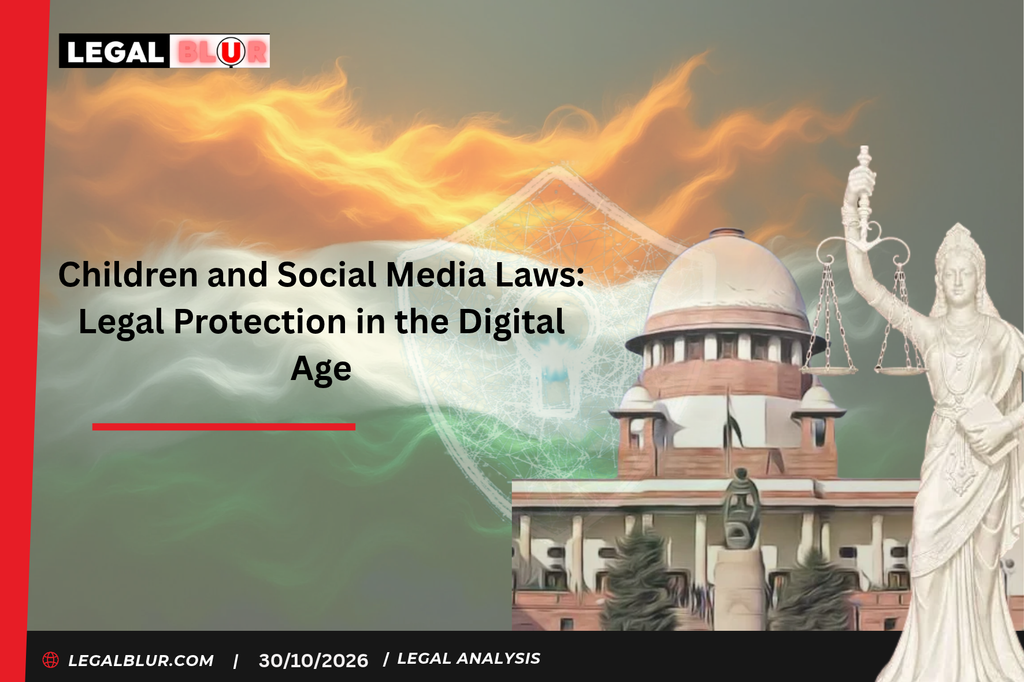
INTRODUCTION
Childhood is shaped by several institutions, such as the family, school, community, and mass media. Today, it is increasingly shaped by social media, children, and by children; I refer to persons under the age of 18 as children, as agreed worldwide.
They build their identity in social media platforms such as TikTok, Instagram, Snapchat, and countless many of these social media platforms that were designed to be utilized by adults, these children from friendship and seek entertainment detrimental to their growth process and fragile minds. Research and public debate have linked cyberbullying and online grooming to exposure to harmful content. The question for lawmakers is no longer whether children are online but whether the law is keeping pace with how they live there. Several laws have been put in place to put a constraint on excessive or uncultured exposure of children to social media. But these laws are easily bypassed by falsifying birthdates. This article examines how the law currently protects children on social media and whether those precautions are adequate.
Case laws
The legal difficulty is the act of balancing the child’s rights under these laws (principles). On one side is the child’s right to protection from harm, a principle that has received recognition in the United Nations Convention on the Rights of the Child (CRC)1989, which also ensures the best interests of the child as a consideration primarily in all options concerning them.
On the other hand, the child has the right to information, association, and even expression, which social media exposure has been able to advance and facilitate. We can also add to this that parents are to guide their children. Governments have responded in different ways. The United States relies on the Children’s Online Privacy Protection Act (COPPA) of 1998, which helps to regulate data collection from children under thirteen, supplemented by a growing number of state laws.
Also, the European Union General Data Protection Regulation sets a digital age of consent between thirteen and sixteen and imposes duties on platforms to protect minors. The United Kingdom’s Online Safety Act 2023 also places a duty of care on platforms, while Australia has moved to the point of restricting social media access for those under sixteen. In Nigeria we have Child’s Right Act 2003, Data Protection Act 2023, also in India, Digital Personal Data protection 2023.
All these principles refer to different aspects of social media regulation for children, from the rights of users to regulatory data and even regulatory and restrictions on some platforms. Courts have come to the realization that the state may protect children in ways it would not protect adults. Hence the case of Prince v. Massachusetts, the Supreme Court held that the state has authority over children’s activities, and it is broader than the authority over adults and even over a parent or guardian’s religious objections. It was ruled 5-4 against Prince, as written by Justice Rutledge, that the state has authority to protect children’s welfare, and this authority/power is larger than the state’s power over adults. Parents have rights, but they don’t include exposing a child to harm or danger, which the state can legitimately prevent it.
In the case of Ginsberg v. New York, the court upheld a law that prohibits the sale of materials to children (minors) that have the potential to cause harm, even though they can be sold to adults, because the state has an independent interest in children. The court ruled 6-3 against Ginsberg in an opinion by Justice Brennan.¹¹ It held that the state could regulate access to certain materials by minors under a lower standard for adults. Parents have the primary rights to direct their children’s upbringing and the law serves as a supplement, not a replacement, of that responsibility.
Secondly, the State has an independent interest in the well-being of youth. This was reaffirmed in the case of New York v. Ferber, describing the protection of minors’ physical and psychological well-being.
And as concerning the welfare of children for the scores of social media, the recent support is Free Speech Coalition v. Paxton,
where the Supreme Court held that the state can require
age verification for websites that comprise sexual content harmful to minors.
The court held 6-3 for Texas in an opinion by Justice Thomas,
relying on the Ginsburg case; the state may
keep minors from content that is obscene as to them, and checking age is a traditional way of doing it offline. Courts applied intermediate scrutiny and accepted that verifying age is a legitimate way to keep harmful content from minors. Similarly, in NetChoice cases, tech platforms can also be held responsible for designs and how they build their products. Because of a law called Section 230, platforms usually can’t be sued over what users post. But there are those instances where courts say they can be sued for how they build their products.
In the case of Anderson v. TikTok, a dangerous challenge that TikTok’s algorithm brought to her FYP.
Even in the case of All these regimes show that laws should be pursued
in protection of the children who have access to these social media handles.
The United States also enforces the law referred to as COPPA (Children’s Online Privacy Protection Act).
It instructs companies to not collect personal information from children
under the age of 13 without their parents or guardians permission. I
n the case of United States v Musical.ly (the app that is now TikTok) collected names,
emails and even other personal details from children without their guardians or parents consent.
Due to a breach of this law, it was required to pay the sum of $5.7 million dollars
because it violated children’s online privacy protection, which would be detrimental to the children in question.
Conclusion
The law is currently moving towards greater protection of children, especially those who have access to social media platforms.
Even courts have consciously accepted that the state has a compelling interest in safeguarding children from the coarse world on social media. Protection has also shifted focus from what children see to how platforms are built.
Decisions reached in cases such as Lemmon v Anderson and
some others that are acting have begun to treat addictive features and algorithm recommendations as product design.
I affirm that the strongest approach is therefore one that regulates platform design
And data practices instead of banning or completely censoring content. Laws have been framed as a duty of care for companies, backed by privacy-respecting age assurance.
All measures that are implemented in the form of laws, principles,
and even court decisions regarding children and social media are geared towards safeguarding children,
as the state owes them a duty of care, even over the religious beliefs of their guardians and parents.