This article is written by Manshi Raj, a final-year BBA LL.B. student at Usha Martin University, Ranchi, Jharkhand. This article will examine emerging legal issues arising from this new technology, review existing laws with respect to how they apply to this technology, and discuss how to implement a balanced regulatory framework that fosters innovation and protects the rights of the individual, as well as the trust of the public.
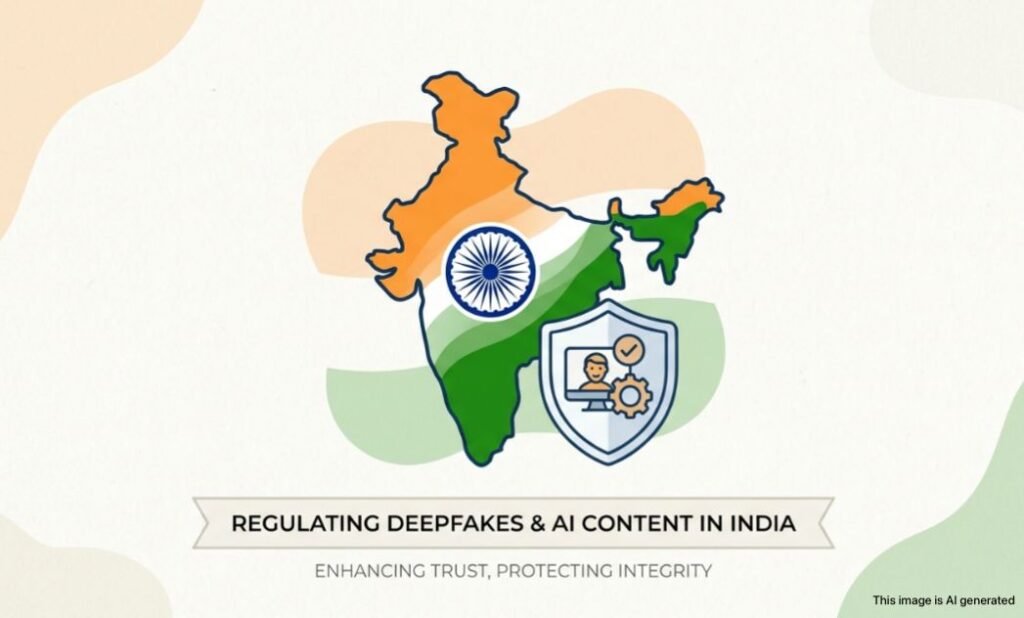
Artificial Intelligence is impacting how we generate and utilise information, but the rapid rate of change influenced by both AI-based content generation and Deepfake Technology has resulted in new challenges to people’s privacy and has created uncertainty with respect to disinformation, reputations, and threats/cybersecurity.
Introduction
Artificial Intelligence (AI) represents one of the most impactful technological advances in history. From medicine, education, entertainment, finance and many more, almost every type of industry is being disrupted through the use of AI technology. As well as having many different uses, generative AI is allowing for the generation of highly realistic images, videos, audio and written text, that are nearly indistinguishable from the actual content.
These technological advances also come with many possibilities, but they have created new avenues for digital manipulation through what are referred to as deepfakes. Deepfakes are synthetic media that are generated using artificial intelligence and deep learning algorithms to mimic the appearance, voice and/or behaviour of a person or group of people. Although the use of this technology has positive applications for enhancing filmmaking, improving access to others and supporting education as an example, its negative use is a major global concern.
In India, there have been a number of instances of this situation related to AI generated content showing the inadequacy of the existing laws that currently exist to meet the challenges that arise from the use of AI technology. With its increasing use around the world, there will certainly be a need to create a suitable legal framework that strikes a balance between encouraging technological change while providing limits to the use of the technology so that an individual’s privacy, dignity and public trust are protected.
Existing Legal Framework in India
Although India does not yet have a dedicated law specifically regulating deepfakes and AI-generated content, several existing legal provisions can be invoked depending on the nature of the harm caused.
Information Technology Act, 2000
The Information Technology Act, 2000 provides certain remedies against the misuse of digital content and online impersonation. Section 66C criminalises identity theft, including the dishonest use of another person’s electronic signature, password, or unique identification information. Section 66D punishes cheating by personation through computer resources, which may apply where deepfakes are used to deceive individuals for financial or other unlawful gain. Further, Sections 67 and 67A prohibit the publication or transmission of obscene and sexually explicit content in electronic form, provisions that may be relevant in cases involving non-consensual deepfake images or videos.
Bharatiya Nyaya Sanhita, 2023
The Bharatiya Nyaya Sanhita, 2023 can also be invoked where AI-generated content results in criminal wrongdoing. Depending on the facts of a particular case, offences relating to impersonation, forgery, cheating, defamation, identity misuse, and the publication or circulation of obscene material may be attracted. Deepfakes used to damage a person’s reputation, deceive the public, or facilitate fraud can therefore give rise to criminal liability under the BNS.
Digital Personal Data Protection Act, 2023
The Digital Personal Data Protection Act, 2023 provides an additional layer of protection by regulating the processing of personal data. The unauthorized collection, use, or manipulation of an individual’s photographs, videos, voice recordings, or biometric information for generating AI content may raise concerns under the Act. The legislation emphasises consent-based processing and imposes obligations on entities handling personal data, thereby offering safeguards against certain forms of AI-enabled privacy violations.
Case Laws
In Justice K.S. Puttaswamy (Retd.) v. Union of India (2017), a nine-judge bench of the Supreme Court unanimously held that the right to privacy is a fundamental right protected under Article 21 and other constitutional freedoms. The judgment is particularly relevant to deepfakes because unauthorized use of a person’s image, voice, or personal data may infringe privacy, dignity, and informational autonomy.
The Supreme Court of India struck down Section 66A of the Information Technology Act of 2000, ruling that it violates the Freedom of Speech and Freedom of Expression guarantees. The court ruled that any limitations on the content published online must be balanced properly between protecting citizens and preserving their constitutional freedoms.
The Court confirmed that the Internet’s Freedom of Speech and Freedom of Expression are protected by the Constitution. This ruling indicates that the regulatory framework to govern the digital domain must be consistent with principles of proportionality and constitutionality.
The Supreme Court reiterated the necessity for ensuring that individual citizens have the right to privacy when it comes to access to personal data by reaffirming the importance of individual data privacy and the protection of the data. This ruling has great significance in cases where AI generated content is made at the expense of individuals by utilizing their personal images, voices, or biometric data without their permission.
- International Perspective: United States and European Union
Countries around the world are starting to make laws about AI-created content. The European Union is trying to create rules that give people rights about transparency and accountability for AI systems. In addition, some states in the United States have created laws that target harmful deep fakes, especially during elections.
Conclusion
Artificial intelligence is an incredible technological achievement of this century; however, with more and more prevalent uses of deep-fakes and AI created content, we see a dangerous new trend of misuse that poses serious threats to privacy, reputational damage, electoral integrity and public trust. Although there are some existing laws to address these issues, e.g. the Information Technology Act 2000, the Digital Personal Data Protection Act 2023 and constitutional protections, there is no law that fully covers the unique issues posed by deep-fake technology.
As such, India needs to develop a comprehensive regulatory framework that balances the need for innovation and accountability in technology while still providing protections for the rights of individuals. For example, establishing transparent disclosure requirements, strengthening intermediary obligations, improving digital literacy and enacting specific laws on AI will help create a safer digital environment. Ultimately, a balanced approach to technology is very important to ensure that artificial intelligence continues to be used as a vehicle for progress and not as a vehicle for manipulation.
Frequently Asked Questions
1. What are deepfakes?
Deep fakes are digital versions of a person’s image, voice or behaviour that appear very realistic but aren’t real. They’re mainly created by using artificial intelligence.
2. Are deepfakes illegal in India?
In India, there is no specific law governing deep fakes, however, there are existing components of the Information Technology Act (2000), the Bharatiya Nyaya Sanhita (2023), and other laws that can be used based on the specific type of offence.
3. How do deepfakes affect privacy?
Deep fakes can be used to misuse a person’s actual images, sounds, or actions without permission, which violates the person’s right to privacy and dignity.
4. Why is regulation of AI-generated content necessary?
Regulation of artificially created content is needed to provide protections against misinformation, identify theft, cybercrime, reputation damage, and threat to democracy.
5. Does India need a separate law on deepfakes?
India would benefit from a separate law on deepfakes. Many experts believe that a distinct legal framework would help protect transparency, accountability, and some fundamental rights of individuals while addressing the unique challenges posed by AI-created content.