
This article is written by Dhriti Sachdeva SRM University, Sonepat Delhi NCR.
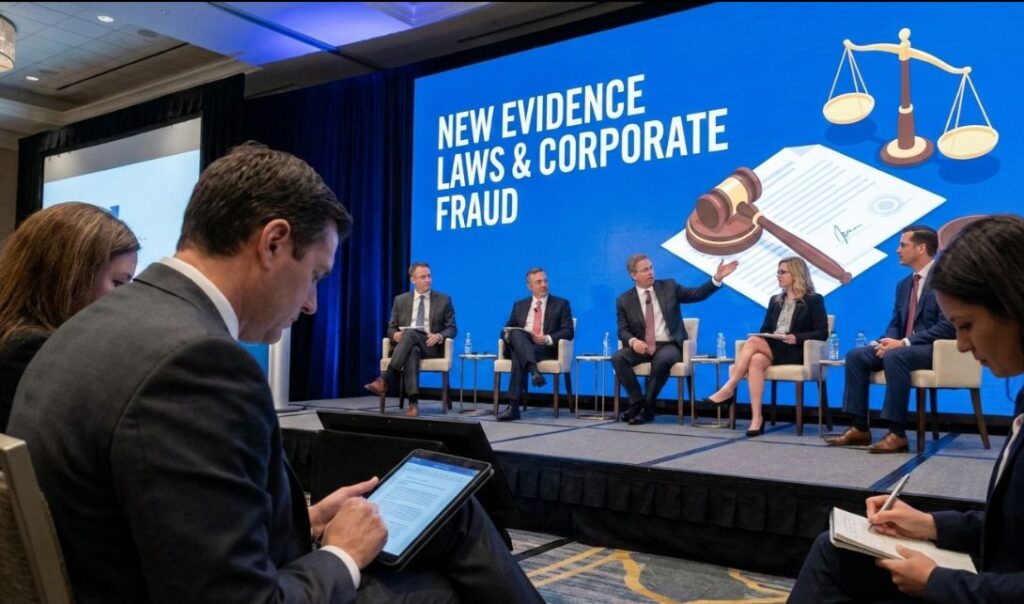
From the 19th century onwards the quest for money arose, a deeper urge to earn money and personal gain from unlawful activities. In the era of globalisation the individuals tend to be more competitive by exchanging ideas, the trend to follow the new policies and new laws that prevent frauds in international markets. From the most famous scams like Harshad Mehta Scam involving banking systems to manipulate financial markets. Hence to regulate this type of manipulations and frauds there needs to be strong evidence laws to prosecute them by making procedure transparent and accountable by publishing statistical data on websites to be available on public domains to be reviewed by the public. It ensures fair treatment and serves for welfare of public interest.
Meaning of Corporate Fraud
It means when there is misfunction in the internal functioning of a company by manipulating the assets by an individual or companies’ employees, directors and members for personal gain. The illegal activities committed by those persons against the company thereby committing financial losses and trust is lost in corporate entities. These include market manipulation, frauds, embezzlement, bribery, misappropriation of funds, mismanagement in financial accounting, creating fake accounts, ponzi schemes and stock market schemes etc. The legal definition of fraud is given under Section 447 of the Companies Act, 2013.
How does Corporate Fraud Impact?
Corporate fraud is far more than a business failure; it is a worldwide tragedy that diverts trillions of dollars from the global economy while causing real misery for individuals across the globe. Experts estimate that fraud costs organizations around five percent of their entire revenue each year. On a global scale, this amounts to at least $2.6 trillion per year, or nearly 5% of the world’s total economic worth. This is the money that could have been used to establish schools, construct hospitals, or generate new employment, but has been stolen away by dishonest people.
When large companies become bankrupt due to fraud, the most devastating consequences are felt by employees and their families. Famous scams like Enron and WorldCom demonstrate how thousands of individuals can lose their employment virtually overnight. Even worse, many employees lose all of their accumulated wealth because the funds for retirement were linked to the company’s shares, which loses value after the scam is detected. Many elderly workers are unable to make up for their losses, resulting in financial instability for the future.
Cross Border Effect
The new UK regulations on inability to prevent fraud indicate a significant shift in how businesses are held liable for the acts of their team members and partners. Listed below is a review of the modifications, the significance of the evidence, and how they are comparable to India’s legal landscape.
The UK’s Economic Crime and Corporate Transparency Act 2023 (ECCTA) creates an unfamiliar “Failure to Prevent Fraud” (FTPF) offense, which goes into force on September 1, 2025. This rule applies to “large” enterprises, which have more than 250 employees, more than £36 million in revenue, or more than £18 million in assets. Crucially, this rule has “extraterritorial reach,” which means it can apply to firms headquartered outside of the United Kingdom, including those in India. If an associated person (such as an employee or agent) commits fraud in any part of the world with a “UK nexus”; meaning the fraud occurred in the UK or resulted in a loss or gain; the parent business may be prosecuted in the UK.
Under this new framework, the FTPF offense is classified as a “strict liability” crime. This means that the prosecution does not need to establish that the company’s directors or senior management knew about or directed the fraud. Instead, the prosecution must solely prove that a firm employee committed a deception with the intent to benefit the corporation.
The “Reasonable Procedures” Defense
Firstly, the person in authority is responsible for preventing fraud. Owners, directors, and top executives must demonstrate to all employees that they encourage honesty. It is inadequate just to provide a code; the “big bosses” need to lead a good example by making it visible that dishonesty or lying will not be allowed. Employees will not follow the rules if their superiors do not. Secondly, corporations ought to lay down and determine the areas that are most likely to be targeted by fraudsters or dishonest employees. Imagine this like checking a house for unguarded windows. The company should examine its processes on a regular basis and ask, “What information could individuals steal from internal controls, and how would they achieve it to manipulate?” By identifying these “weak points,” the companies can address them before a crime occurs.
Thirdly, the safety measures taken by a business should be proportional with its complexity and level of risks. For instance, a large, massive bank does not need the same sophisticated safety safeguards as a tiny, neighborhood store. The rules ought to be “proportionate”; that is, “fair and reasonable.” For a modest risk, you don’t need a comprehensive plan, but for a significant danger, you shouldn’t have a simple plan either. Fourthly, the company must perform due diligence before hiring someone or entering into a contract with another company. We refer to this as “standard procedure” or “due diligence.” It only entails doing background checks to make sure the person or business is reliable. Just as you wouldn’t give your car keys to a stranger unless you knew.
Last but not least to ensure that requirements are never ignored or forgotten, everyone in the organization must receive comprehensive instruction on how to detect and report fraud. In addition to regular training, the organization must routinely examine and adjust its safety procedures in order to ensure their implementation is effective against evolving threats. A corporation is capable of remaining one step ahead of fraudsters and ensure long-term security by combining thorough employee training with routine “check-ups” on its security measures.
How India’s New Evidence Law Addresses Common Fraud Evidence Issues
In the past, fraud jury trials were frequently constrained because lawyers were inclined to question evidence such as electronic communications or financial documents by saying they were falsified or handled improperly. Under the previous Indian Evidence Act (IEA), the definition of a “document” was relatively limited. On the other hand, the new Bharatiya Sakshya Adhiniyam (BSA) addresses this issue by emphasizing that “documents” now encompass all electronic records. This modification makes it notably more difficult to dismiss digital proof since electronic recordings are now considered Primary Evidence (the initial and most trusted source) under Section 57. This is highly beneficial in resolving corporate fraud cases involving digital transactions and stolen identities, among which is the Shravan Gupta case, in which the chairman was accused of a huge 180-crore fraud.
Another significant challenge in fraud prosecutions is demonstrating that a digital signature or email was genuinely sent by the accused. Previously, a defense attorney might claim that a signature was falsified or that the data was tampered with. The BSA addresses this in Section 86, which establishes a “presumption” that electronic data and signatures are legitimate unless proven otherwise. Furthermore, Sections 73 and 66 establish precise guidelines for authenticating digital signatures and demonstrating their authenticity. Section 61 makes electronic evidence equivalent to physical paper documents, ensuring that digital records have the same legal weight as a signed paper contract.
Relevant Case Study
Satyam, previously India’s IT jewel, fell in 2009 after founder Ramalinga Raju admitted to a $1.47 billion scam. Raju, dubbed “India’s Enron,” spent years inflating profits and creating false cash. This landmark controversy underlined the importance of independent auditing, transparency company management, and ethical leadership in maintaining public trust.
Conclusion
They have the legal power to ensure the adoption of the Bharatiya Sakshya Adhiniyam (BSA). The new law guarantees that the sophisticated digital indications discovered by auditors are no longer readily disregarded by defense challenges by elevating electronic documents to “Primary Evidence” and providing explicit guidelines for digital signatures. In the end, the BSA’s stricter proof requirements combined with an auditor’s investigative approach provide investors with an alarming barrier that prevents corporate fraudsters from hiding behind intricate digital trails.
Frequently Asked Questions
What is the new “Failure to Prevent Fraud” statute in the UK?
Large companies can be held liable for the acts of employees and partners who commit fraud to benefit the business. It is a strict liability crime the company can bear strict penalties even if they were unaware.
What impact does India’s BSA law have on proof of fraud?
With implementation of BSA the electronics records and digital evidence play an important role and serve as primary evidence.
What ethical lesson can be learned from the Satyam scandal?
High profits can often hide corruption and fake profits destroys transparency too,
References
https://www.criminallawjournal.org/article/139/5-2-1-499.pdf
https://taxguru.in/corporate-law/forensic-auditors-detect-corporate-fraud-india.html
https://www.scirp.org/journal/paperinformation?paperid=30220
https://www.5paisa.com/finschool/financial-scams-why-investors-need-to-be-vigilant