
This article is written by Sisanda Hlatshwayo, University of KwaZulu-Natal.
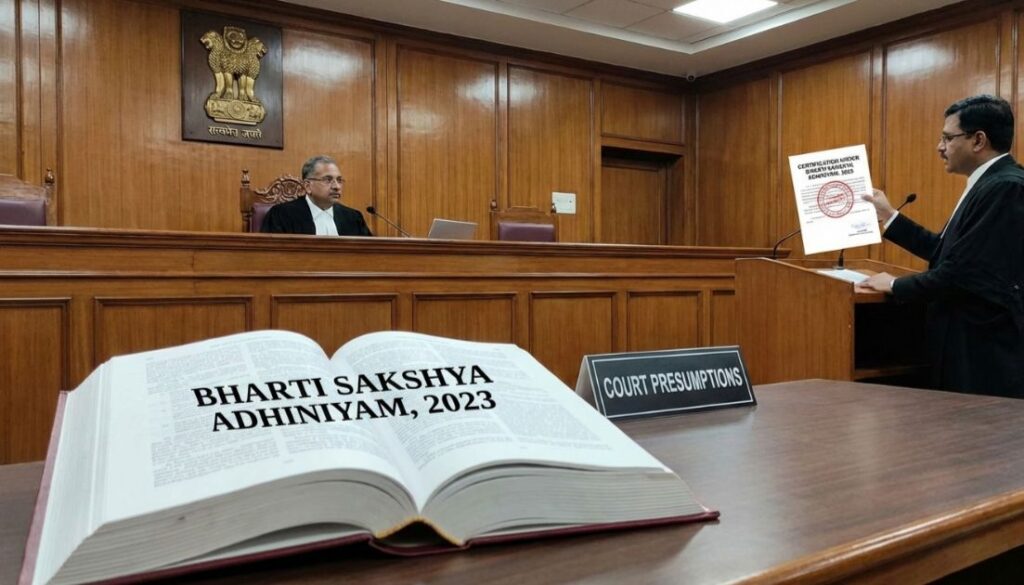
Evidence is important in the justice system as it is used to prove whether the accused is guilty or innocent. It serves as a factual foundation for settling cases and determining guilt or innocence. As technology evolves, there is a rise of digital/electronic evidence in court proceedings. The purpose of the Bharatiya Sakshya Adhiniyam (BSA) 2O23 is to blend and lay down the general principles and rules of an unprejudiced free trial.
The proper handling of electronic evidence is important because electronic records are fragile and can be altered by improper handling. The Indian parliament enacted BSA 2023 in replacement of the Indian Evidence Act 1872. BSA 2023 simplifies the treatment of electronic records as evidence.
What is Electronic Evidence?
According to section 2(2) of BSA, the Information & Technology Act can be referred to when defining electronic evidence. Section 79A of the Information & Technology Act, 2000 defines electronic form of records as information of evidential value that is kept or transferred in electronic form. This information includes digital fax machines, cell phones, digital audio, digital video, and computer evidence. Under BSA 2023, electronic evidence includes, electronic oral statements, and electronic records. According to BSA 2023, electronic records on documents on electronic devices, messages, websites, emails, server logs, and voice mail messages are documents.
Legal Framework
According to section 63 of BSA 2023, any information held in ana electronic record that is printed on paper, recorded, stored, or copied in an electronic form shall be referred to as a document. Those kinds of electronic records are permitted in any proceedings, without the original electronic record, as valid evidence. BSA 2023 updates the provisions of the Indian Evidence Act 1872 to reflect modern technology. The moral of BSA 2023 is that electronic records are admissible as evidence when their integrity and authenticity are properly demonstrated.
Under BSA 2023, if original evidence is produced, the court reverses the right to directly examine the device that contains the original evidence. In that case, the original evidence is treated in the same manner as an original document. In a case where a copy of the original evidence is produced, BSA 2023 enables the copy to be treated as valid evidence under certain conditions. A certificate is required along with the electronic record.
The certificate confirms that the electronic record was produced from an electronic system or computer, the regular use of the device for the activities, and the accuracy of the evidence produced. The certificate must be signed by someone who lawfully controls the electronic device. Lawyers file the electronic record and the certificate which explain how the electronic record was generated in practice. The certificate satisfies the court in the fact that the electronic record presented as evidence was not tempered with.
Comparison of BSA 2023 with the Indian Evidence Act 1872
Electronic records that are presented as evidence were governed by section 65B under the Indian Evidence Act 1872. Under that provision, courts rejected electronic records as evidence due to confusion of the issue of the evidence. BSA 2023 continues the structure of the Indian Evidence Act 2023 but adapts a more modern framework. It makes the procedure simpler and reduces the confusion that courts and legal professionals faced with the Indian Evidence Act 1872.
How Electronic Records are Admissible Under BSA 2023
The electronic records presented as evidence must be relevant to the facts in court to be admissible. The court examines the electronic records to ensure they are reliable and accurate by considering the source of the electronic records, determining whether the electronic records were obtained in a lawful manner, considering the devices that were used to create the electronic records, and determining whether the electronic records were altered or tempered with. The credibility of the electronic records is examined by the court to determine whether the electronic records are admissible. BSA 2023 focuses on their credibility.
Relevant Case Studies / Case Laws
In the case of Anvar P.V. v. P.K Basheer & Ors (2014 10 ACC 473), the court held that a certificate is required in order for electronic evidence to be admissible, as it is stated by section 65B of the Indian Evidence Act. The electronic evidence would be rejected if no certificate was provided. In the case of Arjun Panditrao Khoktkar v. Kailash Kushanrao Gorantyal (2020), the court reaffirmed the inadmissibility of electronic records that are not accompanied by a certificate unless original electronic records were produced. The court also emphasized that oral descriptions cannot be substitutes for the required certificate. In the case of Tomaso Bruno & Another v. State of Uttar Pradesh (2015) 7 SCC 178, the Supreme Court emphasized the recognition and treatment of electronic records as reliable evidence under the condition that they meet the legal requirements for them to be admissible.
Challenges and Way Forward
Difficulties still exist despite the improvements made by BSA 2023. There is a difficulty in obtaining certificates from third parties such as cloud service providers and telecommunication companies. There are issues surrounding privacy and lawful access to the electronic records that may rise in criminal investigations. Judicial interpretation will play a main role in the clarification of the application of stricter technical requirements, considering the fact that BSA 2023 is a new law.
Conclusion
The purpose of the Bharatiya Sakshya Adhiniyam (BSA) 2O23 is to blend and lay down the general principles and rules of an unprejudiced free trial. Under BSA 2023, if original evidence is produced, the court reverses the right to directly examine the device that contains the original evidence. In that case, the original evidence is treated in the same manner as an original document. In a case where a copy of the original evidence is produced, BSA 2023 enables the copy to be treated as valid evidence under certain conditions. There are issues surrounding privacy and lawful access to the electronic records that may rise in criminal investigations. Judicial interpretation will play a main role in the clarification of the application of stricter technical requirements, considering the fact that BSA 2023 is a new law.
Frequently Asked Questions
What is BSA 2023?
The Bharatiya Sakshya Adhiniyam (BSA) 2O23 simplifies the law of digital and electronic evidence. It is a legislative reform that replaces the Indian Evidence Act 1872.
What is the Purpose of BSA 2023?
The purpose of the Bharatiya Sakshya Adhiniyam (BSA) 2O23 is to blend and lay down the general principles and rules of an unprejudiced free trial.
What is the Best Evidence Rule in BSA 2023?
The best evidence rule in BSA 2023 clarifies that original evidence must be produced in court, unless there is an application of exception. Secondary evidence can only be produced when there is no original evidence. This rule maintains accurate evidence that is not altered or manipulated. This ensures the credibility of the evidence.
When DID BSA 2023 Take Effect?
BSA 2023 came into effect on 01 July 2024.
What are the Main Parts of BSA 2023?
- Part 1: Preliminary and general principles
- Part 2: Relevancy of facts
- Part 3: Proof and presumptions
- Part 4: Production and effect of evidence
References
https://section1.in/bharatiya-sakshya-adhiniyam-2023/?utm_source=chatgpt.com
https://cdnbbsr.s3waas.gov.in/s3ec01a0ba2648acd23dc7a5829968ce53/uploads/2024/12/2024122766.pdf
https://testbook.com/ias-preparation/bharatiya-sakshya-adhiniyam-2023
https://indiankanoon.org/doc/187283766