
This article is written by Ishika Jangir, 1st year LL.M. student at Amity University, Kolkata. The article focuses on the use of AI in legal profession.
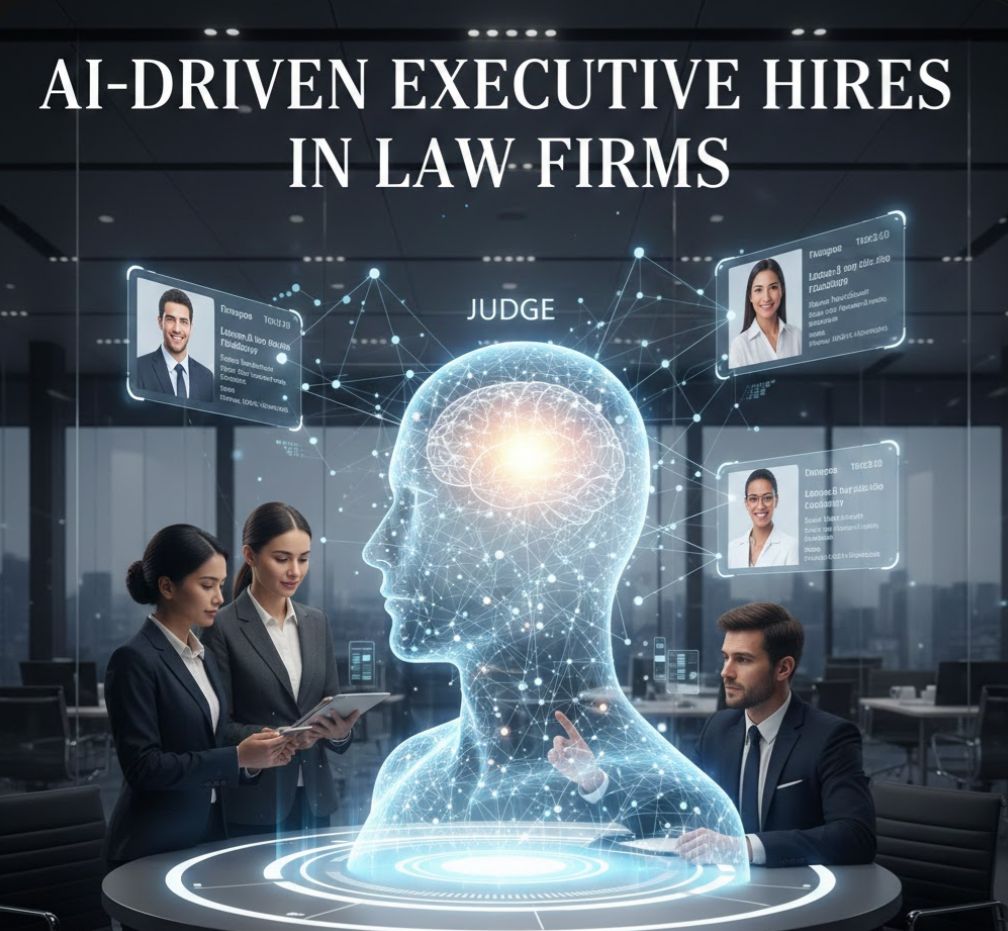
The introduction of AI (artificial intelligence) into the practice of law represents an important cornerstone in its evolution. In addition to being adopted by large firms, generative AI is already having an impact on the business of law at every level, affecting how lawyers conduct legal research, provide customer service, as well as developing and executing strategy for their firm. This rapid integration of generative AI is creating more than just new ways to do things; it is fundamentally changing the way that lawyers do business and compete with each other.
To take advantage of this transformative power and protect their interests, some of the largest U.S. law firms are putting into place a hiring initiative, whereby they create and hire for new executive positions such as “Chief of AI” or Chief of AI Strategy (CAIO). Individuals hired into these positions typically possess both a legal background and substantial technical knowledge of the application and use of generative AI and AI technologies in general. These new CAIOs and Chief of AI Strategy will be responsible for overseeing the organization’s AI strategy, ensuring the compliance of those strategies with ethical standards and regulations, mitigating the potential for unintended consequences associated with the insurgence of AI tools, and influencing the direction of the firm’s AI efforts towards profitability by providing unique, differentiated, and innovative services to their customers. The article below provides a thorough analysis of the legal and strategic value associated with this growing trend, the challenges associated with the use of AI in law, and the long-term ramifications associated with using AI tools in law.
AI Applications and Strategic Executive Roles
The push for dedicated AI executives is directly linked to the transformative capabilities of AI in key practice areas:
- AI-assisted legal research and due diligence will be much quicker than traditional human attorneys because it will be able to search through thousands of legal documents. For instance, AI can search through millions of cases, statutes, and contracts in minutes, rather than the many hours that would have been spent by human lawyers. In addition to being much more efficient, AI will also reduce the number of billable hours lawyers can charge junior associates.
- AI will enable e-discovery and contract reviews to be performed in minutes instead of days, and it will be able to find and identify risks, anomalies, and critical clauses with incredible consistency and accuracy.
- By using AI, law firms will have the ability to access predictive analytics, which will allow them to anticipate litigation outcomes based on historical data, judge decisions, and other variables. This will allow attorneys to better advise clients about settlement options and predicted trial outcome.
- By removing routine tasks from lawyers’ daily workloads through AI automation, lawyers will be able to spend their time working on more complex matters, developing strategies, and deepening the relationships with their clients, ultimately providing increased satisfaction and increased quality of service to their clients.
The duties of a new AI Executive include:
- Developing an AI Strategy that fits within the overall goals of the Firm and meets Client Needs through appropriate investment, development and implementation.
- Ensuring that all Firm Guidelines regarding the Responsible and Ethical Use of Artificial Intelligence are adhered to through compliance with the appropriate Rules of Professional Conduct.
- Managing sensitive Client Data associated with the AI System(s) and ensuring that the secure handling of that data is a top priority for an Executive level of the Firm.
- Driving the Change Management Approach to training legal staff and integrating AI into the workflow process without compromising quality or creating resistance from within the Firm.
Case Laws and Ethical Considerations
While specific court cases directly ruling on the appointment of a CAIO are non-existent, the legal implications and challenges driving this trend are already surfacing in jurisprudence and bar association opinions.
1. Duty of Technological Competence (Model Rule 1.1)
The Model Rule of Professional Conduct 1.1 of the American Bar Association (ABA) requires that lawyers provide competent representation. As a part of competent representation, lawyers are also required to remain competent in the use of technology, and to be aware of the benefits of using around-the-clock technology and the risks associated with those types of technologies. This ethical obligation demands that professionals and lawyers have knowledge and expertise at an executive level.
To illustrate the implications of this ethical requirement, consider the case of Mata v. Avianca, Inc., decided in 2023. While not a case related to A.I. type of professions, it demonstrates the risks of generated outputs by A.I. technologies. In that case, a lawyer was reprimanded for presenting a brief generated by a generative A.I. technology (i.e., ChatGPT) that contained “hallucinated” references to cases and case citations that did not exist. This illustrates how the risks associated with generated outputs created through A.I. technology will be an ongoing risk for legal professionals. Additionally, Lawyers have an obligation to oversee and verify generated output created through A.I. technology. Therefore, using A.I. executive professionals (executives of A.I. technologies) to ensure the systems, process, and training are in place to reduce, eliminate, and/or mitigate the risk of a breach of the ethical obligations of attorneys is essential.
2. Confidentiality and Data Security (Model Rule 1.6)
AI systems require vast amounts of data. Many companies collect and store massive amounts of customer data. Companies have a strong ethical obligation to maintain the confidentiality of customer information. Many laws and regulations impact data privacy, such as GDPR in Europe and numerous states in the US, and have considerable ramifications on the way companies design and manage AI technologies. Companies that use third-party AI vendors or have internal processes for using AI must protect the confidentiality of their customers’ information by ensuring their contracts with AI vendors and identifying internal processes that limit access to customer information and eliminate any risk of disclosure or use of that information to develop public AI models.
Additionally, there is risk associated with customer information entered into a public-facing AI tool, as there is a chance that it may be compromised, therefore it is imperative to have the appropriate, sophisticated, firm-specific AI infrastructure overseen by senior management.
3. Accountability and Malpractice Liability
The primary challenge is identifying who will be held accountable if an AI system causes harm to clients due to user error.
- A Legal Question: Would the attorney that utilizes the AI system be liable if the legal AI tool produces an inaccurate routing of research, an incorrect contract clause, or otherwise produced a bad prediction? Based on standard malpractice criteria, the attorney holding custody of the case is ultimately liable, since using the AI is a supplement/extension of their professional abilities rather than a substitute for them.
- Executive Duties: To reduce the risk of malpractice within the law firm and to establish a proper internal audit/quality control framework for all AI-assisted work, the executive of the AI function must create a clearly defined system.
Conclusion: The Race for AI Leadership
Law firms who decide to hire designated AI leaders is a transition made from using AI experimentally to creating an effective Strategic plan for the use of AI. A trend that goes far past a fad from the expectation of improved efficiency, accuracy, and more innovative delivery, creates an entirely new position for these law firms and their Future Architecture.
The new leaders in AI create the Future Architect of a Law Firm and need to be able to traverse the complex landscape of technological opportunities, ethical responsibilities, and legal liabilities. Any firm that successfully integrates AI into its business with strong leadership; balancing the pursuit of efficiency with a steadfast commitment to ethical practices and human supervision; will have a competitive advantage over the long-term and will have the ability to attract the best talent as the legal marketplace continues to evolve.
FAQs:
- Will AI replace junior lawyers?
Ans: AI has been designed to replace lawyers as they automate repetitive, routine-based jobs like document reviews; rather than eliminating them completely. Junior lawyers who have less experience will now be able to work on other complex tasks with clients that have a higher value through AI technology.
- What are the biggest risks of using AI in legal work?
Ans: The primary risks are inaccurate outputs (hallucinations), breach of client confidentiality (input risk), potential algorithmic bias in decision-making, and non-compliance with the duty of technological competence.
- Is the use of AI in law currently regulated?
Ans: Direct, comprehensive AI-specific regulation in the US legal field is still developing. However, its use is governed by existing Rules of Professional Conduct (e.g., competence, confidentiality), data privacy laws (e.g., GDPR), and general consumer protection statutes.
References:
- Law Firms seek AI edge with new executive hires (Law firms seek AI edge with new executive hires – The Economic Times)
- AI in law and Legal Practice: Applications, Impact & Challenges (AI in Law and Legal Practice: Applications, Impact & Challenges)
- AI for Law Firms: Benefits, Challenges, and Best Tools (AI for Law Firms: Benefits, Challenges, and Best Tools – Spellbook)
- The Legal Implications of AI and Technology in Law (The Legal Implications of AI and Technology in Law – Woodfines)